- Home
- About Us
- Products
- Hydraulic Metal Briquetting Machine
- Hydraulic Briquetting Machine
- Manganese Briquetting Machine
- Cast Iron Briquetting Machine
- Copper Briquetting Machine
- Metal Briquetting Machine
- Iron Briquetting Machine
- Cast Steel Briquetting Machine
- Steel Briquetting Machine
- Aluminium Briquetting Machine
- Scrap Briquetting Machine
- Brass Briquetting Machine
- Bronze Briquetting Machine
- Titanium Briquetting Machine
- Magnesium Briquetting Machine
- Tin Briquetting Machine
- Non Ferrous Briquetting Machine
- Hydraulic Metal Baler Machine
- Hydraulic Metal Shear Machine
- Hydraulic Metal Briquetting Machine
- News
- Download
- Send Inquiry
- Contact Us

How Can Scrap Metal Cutting Shears Transform Metal Recycling Efficiency and Profitability
In today's competitive recycling industry, efficient metal processing equipment is essential for improving productivity and controlling operating costs. ECOHYDRAULIC provides advanced Scrap Metal Cutting Shears designed to process steel, aluminum, copper, iron, and mixed metal scrap with powerful hydraulic force, reliable performance, and flexible automation options. For recycling plants, steel mills, and scrap yards, selecting the right hydraulic shearing equipment can significantly improve material handling efficiency and support long-term operational growth.
Scrap metal cutting shears are essential hydraulic machines for reducing oversized metal scrap into manageable pieces for transportation, storage, and further processing. This article explains how hydraulic shearing technology works, explores the major machine features and applications, compares available models, and identifies the most important factors when choosing industrial scrap metal cutting equipment. It also introduces ECOHYDRAULIC's manufacturing capabilities and customized equipment solutions for global recycling businesses.
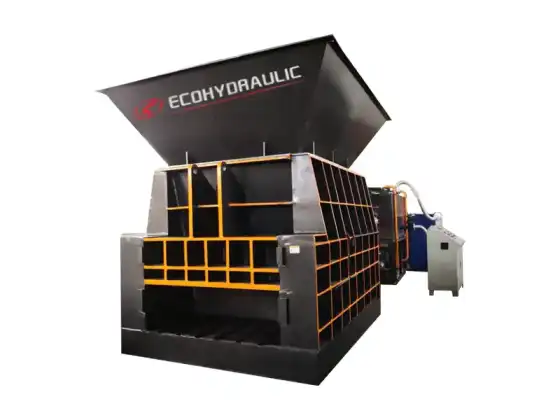
Table of Contents
1. What Are Scrap Metal Cutting Shears?
2. How Do Hydraulic Scrap Metal Shears Work?
3. What Are the Key Features of Modern Scrap Metal Cutting Shears?
4. What Models and Technical Specifications Are Available?
5. Where Are Scrap Metal Cutting Shears Used?
6. How Do You Choose the Right Scrap Metal Cutting Shear?
7. Why Choose ECOHYDRAULIC as Your Equipment Manufacturer?
8. How Can You Maintain Hydraulic Shearing Equipment?
1. What Are Scrap Metal Cutting Shears?
Scrap metal cutting shears are heavy-duty industrial machines designed to cut and reduce large quantities of metal waste into smaller, more manageable sections. They are widely used in metal recycling facilities where bulky scrap materials must be processed before sorting, transportation, melting, or remanufacturing.
Unlike conventional mechanical cutting equipment, hydraulic scrap metal shears use high-pressure hydraulic systems to generate substantial cutting force. This allows them to handle demanding materials, including thick steel sections, aluminum scrap, copper components, and mixed metal waste.
Depending on the machine configuration, the equipment can process different material dimensions and production volumes. Container shears, for example, use a horizontal feeding and cutting arrangement to support continuous scrap processing.
For recycling businesses, the main advantages include:
- Reducing oversized scrap into transportable pieces.
- Improving the efficiency of downstream recycling operations.
- Reducing manual material handling requirements.
- Making scrap storage and transportation more convenient.
- Supporting consistent metal processing operations.
By integrating suitable shearing equipment into a recycling line, operators can establish a more organized and productive metal processing workflow.
2. How Do Hydraulic Scrap Metal Shears Work?
The working principle of hydraulic scrap metal cutting shears is based on converting hydraulic energy into powerful mechanical cutting force. A hydraulic pump supplies pressurized oil to the hydraulic cylinders, which drive the cutting mechanism and move the blades against the metal material.
The typical operating process includes several stages:
- Material Feeding: Scrap metal is loaded into the machine's feeding chamber or cutting area using suitable handling equipment.
- Material Positioning: The material is arranged within the cutting zone to ensure stable positioning and effective blade engagement.
- Hydraulic Pressurization: The hydraulic power system generates the pressure required to drive the cutting cylinders.
- Shearing Operation: The moving blade applies sufficient force to separate the metal into smaller sections.
- Material Discharge: The processed scrap is discharged for collection, sorting, transportation, or further recycling.
Modern hydraulic shears can incorporate automatic or semi-automatic control systems, depending on production requirements. These configurations help operators manage repetitive cutting operations while maintaining consistent working procedures.
The overall cutting performance depends on several factors, including hydraulic pressure, blade condition, material thickness, material properties, and machine configuration. Therefore, equipment selection should always be based on the actual scrap materials being processed.
3. What Are the Key Features of Modern Scrap Metal Cutting Shears?
Industrial recycling operations require equipment that can withstand continuous workloads while maintaining reliable cutting performance. High-quality scrap metal cutting shears combine strong structural construction, efficient hydraulic technology, and practical operating systems.
Powerful Hydraulic Cutting System
The hydraulic drive system provides the substantial force required to cut different metal materials. An optimized hydraulic circuit helps maintain stable operation while supporting efficient energy utilization.
Heavy-Duty Machine Structure
Reinforced structural components and high-strength steel plates provide the mechanical stability needed for demanding industrial applications. A robust frame helps the machine withstand repeated cutting loads during long-term operation.
Wear-Resistant Cutting Blades
Cutting blades manufactured from high-quality alloy steel offer improved resistance to wear during repeated metal shearing operations. Proper blade selection, adjustment, and maintenance can help extend service life and reduce replacement frequency.
Flexible Automation Options
Different production environments require different levels of operational control. Hydraulic shears can be configured with manual, semi-automatic, or fully automatic control systems according to customer requirements.
Customized Machine Configurations
Not every recycling facility processes the same materials or operates at the same production capacity. Customized machine configurations allow buyers to select suitable cutting forces, blade lengths, chamber dimensions, and operating arrangements.
These features make hydraulic shearing machines practical solutions for recycling businesses seeking dependable equipment and improved production efficiency.
4. What Models and Technical Specifications Are Available?
Choosing the appropriate machine capacity is an important step in building an efficient scrap metal processing operation. ECOHYDRAULIC offers several container shear models with different shearing forces, motor configurations, blade lengths, and shearing heights.
The following table presents the technical specifications of the available models:
| Model | Shearing Force | Motor Power | Blade Length | Shearing Height | Control Method |
|---|---|---|---|---|---|
| CS-315 | 315 Tons | 22KW × 2 | 1400 mm | 300 mm | Automatic |
| CS-400 | 400 Tons | 37KW × 2 | 1400 mm | 400 mm | Automatic |
| CS-500 | 500 Tons | 45KW × 2 | 1400 mm | 400 mm | Automatic |
| CS-630 | 630 Tons | 55KW × 2 | 1600 mm | 400 mm | Automatic |
| CS-800 | 800 Tons | 55KW × 3 | 1800 mm | 500 mm | Automatic |
| CS-1000 | 1000 Tons | 55KW × 4 | 2000 mm | 500 mm | Automatic |
Note: These specifications are based on ECOHYDRAULIC's published product information. Actual equipment selection should be confirmed with the manufacturer according to material characteristics, installation conditions, and production requirements.
For example, a CS-315 may be suitable for operations requiring a lower nominal shearing force, while the CS-800 and CS-1000 offer higher nominal capacities for demanding industrial applications.
Buyers should evaluate the complete processing requirements rather than selecting equipment based solely on the maximum shearing force.
5. Where Are Scrap Metal Cutting Shears Used?
Scrap metal cutting shears are widely applied across industries that generate, collect, or process metal waste. Their versatility makes them valuable equipment for both dedicated recycling facilities and industrial production plants.
Scrap Metal Recycling Plants
Recycling facilities handle various types of oversized metal waste. Hydraulic shears reduce bulky materials into manageable sizes, helping improve subsequent sorting, storage, and transportation processes.
Steel Mills and Foundries
Steel manufacturers and foundries generate metal offcuts, rejected components, and production scrap. Industrial shearing equipment helps prepare these materials for recycling and reuse.
Automobile Dismantling Facilities
Vehicle dismantling operations produce metal components in different shapes and sizes. Appropriate hydraulic cutting equipment helps process selected scrap materials for further recycling.
Non-Ferrous Metal Processing
Aluminum and copper recycling businesses require suitable equipment for reducing metal scrap before additional processing. Hydraulic shears can be configured to accommodate different non-ferrous metal applications.
Waste Management Centers
Large waste management facilities often receive mixed metal materials from commercial and industrial sources. Scrap shearing equipment supports more efficient volume reduction and material preparation.
In each application, the machine must be matched to the specific material composition, dimensions, and processing requirements.
6. How Do You Choose the Right Scrap Metal Cutting Shear?
Purchasing industrial scrap metal cutting shears is a long-term investment. A machine that does not match the actual production requirements may result in unnecessary energy consumption, inefficient operation, or increased maintenance expenses.
Before choosing a hydraulic shear manufacturer or supplier, consider the following factors:
- Material Type: Determine whether the machine will primarily process steel, iron, aluminum, copper, or mixed metal scrap.
- Material Dimensions: Evaluate the maximum material thickness, width, length, and overall feeding dimensions.
- Required Cutting Force: Select an appropriate shearing force according to material strength and cutting conditions.
- Production Capacity: Estimate daily processing volume and the required operating frequency.
- Blade Configuration: Check blade length, material quality, replacement convenience, and maintenance requirements.
- Automation Level: Determine whether manual, semi-automatic, or automatic operation best suits the production workflow.
- Installation Conditions: Consider available floor space, electrical supply, foundation requirements, and material handling arrangements.
- After-Sales Support: Evaluate technical assistance, spare parts availability, installation guidance, and maintenance services.
It is also important to request a detailed technical proposal from the manufacturer. A professional supplier should be able to evaluate the customer's material samples, production objectives, and site conditions before recommending a suitable machine configuration.
7. Why Choose ECOHYDRAULIC as Your Equipment Manufacturer?
Selecting an experienced manufacturer is just as important as choosing the right machine model. ECOHYDRAULIC focuses on hydraulic metal recycling equipment and provides solutions for customers in the global scrap processing industry.
Its manufacturing capabilities and company advantages include:
- Established Manufacturing Background: Founded in 1997, ECOHYDRAULIC has developed experience in hydraulic metal recycling machinery.
- Global Installation Experience: More than 4,000 installed systems support recycling operations in different markets.
- Manufacturing Facilities: The factory covers approximately 30,000 square meters, including machining and assembly facilities.
- International Market Coverage: Products have been exported to more than 50 countries, including the United States, Canada, India, and Russia.
- Quality Certifications: The company holds CE and ISO 9001 certifications.
- Research and Development: Its technical capabilities include 12 national patents.
- Overseas Technical Support: A professional after-sales team provides assistance to international customers.
Beyond scrap metal cutting shears, ECOHYDRAULIC also manufactures a range of hydraulic metal recycling equipment, including:
- Hydraulic Metal Briquetting Machines for compacting metal chips and loose scrap.
- Hydraulic Metal Baler Machines for compressing recyclable metal materials.
- Hydraulic Metal Shear Machines for industrial metal cutting applications.
By providing multiple equipment categories, ECOHYDRAULIC can help customers evaluate suitable machinery for different stages of metal recycling and processing.
8. How Can You Maintain Hydraulic Shearing Equipment?
Regular maintenance is essential for keeping industrial hydraulic shears operating safely and efficiently. Although heavy-duty machines are designed for demanding workloads, neglecting maintenance can accelerate component wear and increase unexpected downtime.
Recommended maintenance practices include:
- Inspect Cutting Blades: Regularly check blade edges for wear, damage, and incorrect positioning. Replace or maintain blades according to their actual condition.
- Monitor Hydraulic Oil: Check oil levels and condition, and follow the manufacturer's recommended oil replacement intervals.
- Check Hydraulic Hoses: Inspect hoses, connectors, cylinders, and seals for leakage, deterioration, or abnormal pressure conditions.
- Maintain Electrical Components: Inspect control panels, wiring, sensors, and electrical connections to support reliable operation.
- Clean the Working Area: Remove accumulated metal debris and maintain clear access around feeding and discharge areas.
- Follow Operating Procedures: Ensure operators receive proper training and follow the machine's safety instructions.
Before performing maintenance or entering hazardous machine areas, isolate the power supply and release stored hydraulic energy according to the manufacturer's lockout and safety procedures.
A structured preventive maintenance program helps improve equipment availability, extend component service life, and protect operators.
9. Frequently Asked Questions
Q1: What materials can scrap metal cutting shears process?
Hydraulic scrap metal cutting shears can process various metal materials, including steel, iron, aluminum, copper, and mixed metal scrap. The suitable material dimensions and cutting conditions depend on the machine model and configuration.
Q2: What is the difference between container shears and gantry shears?
Container shears generally use a horizontal feeding and cutting arrangement, making them suitable for processing scrap through a container-style chamber. Gantry shears use a different structural and feeding configuration. The appropriate choice depends on material characteristics, production requirements, and site layout.
Q3: How do I determine the required shearing force?
Required shearing force depends on material strength, thickness, width, and cutting conditions. Buyers should provide detailed material information to the manufacturer so engineers can recommend an appropriate machine capacity.
Q4: Can ECOHYDRAULIC customize scrap metal cutting shears?
Yes. ECOHYDRAULIC provides customized solutions based on material dimensions, cutting requirements, and production capacity. Customers can discuss their application requirements with the engineering team to determine a suitable configuration.
Q5: Are automatic control systems available?
Yes. ECOHYDRAULIC offers different operating configurations, including manual, semi-automatic, and fully automatic control options, depending on the machine design and customer requirements.
Q6: How long do hydraulic shear blades last?
Blade service life depends on the material being processed, operating frequency, cutting conditions, and maintenance practices. High-quality alloy steel blades offer good wear resistance, while regular inspection and proper adjustment help extend their service life.
Q7: Does ECOHYDRAULIC provide overseas installation and technical support?
Yes. ECOHYDRAULIC has an overseas after-sales service team that can provide installation guidance, operator training, and technical assistance to international customers.
10. Conclusion
Scrap metal cutting shears play an important role in modern recycling operations by reducing oversized metal waste into manageable materials for further processing. With powerful hydraulic systems, reinforced machine structures, wear-resistant blades, and flexible automation options, these machines help recycling facilities improve material handling efficiency and maintain reliable production workflows.
Choosing the right equipment requires careful consideration of material types, cutting dimensions, required shearing force, production capacity, and long-term maintenance needs. Working with an experienced manufacturer can make the selection process more efficient and help ensure that the equipment meets actual operating requirements.
ECOHYDRAULIC offers a range of hydraulic scrap processing solutions, supported by manufacturing facilities, international project experience, and customized engineering services. If you are looking for durable, efficient, and customizable Scrap Metal Cutting Shears for your recycling business, explore our product solutions and contact us today to discuss your material processing requirements, request detailed technical specifications, and get a professional quotation for your project.
Previous :
-
Related News
- How Does a Cast Iron Briquetting Machine Improve Metal Recycling Efficiency?
- How Can a Copper Briquetting Machine Improve Metal Recycling Efficiency?
- How Does an Aluminium Briquetting Machine Transform Metal Scrap into Valuable Resources?
- How Does a Plate Shear Machine Boost Production Efficiency?
- What Are the Advantages of Hydraulic Metal Briquetting Machine?
- How Does an Iron Briquetting Machine Work?
Leave me a message