- Home
- About Us
- Products
- Hydraulic Metal Briquetting Machine
- Hydraulic Briquetting Machine
- Manganese Briquetting Machine
- Cast Iron Briquetting Machine
- Copper Briquetting Machine
- Metal Briquetting Machine
- Iron Briquetting Machine
- Cast Steel Briquetting Machine
- Steel Briquetting Machine
- Aluminium Briquetting Machine
- Scrap Briquetting Machine
- Brass Briquetting Machine
- Bronze Briquetting Machine
- Titanium Briquetting Machine
- Magnesium Briquetting Machine
- Tin Briquetting Machine
- Non Ferrous Briquetting Machine
- Hydraulic Metal Baler Machine
- Hydraulic Metal Shear Machine
- Hydraulic Metal Briquetting Machine
- News
- Download
- Send Inquiry
- Contact Us

How Does a Cast Iron Briquetting Machine Improve Metal Recycling Efficiency?
Article Summary: A Cast Iron Briquetting Machine is designed to transform loose cast iron chips, turnings, and other metal scrap into dense, manageable briquettes. By reducing scrap volume, improving material handling, recovering valuable metal, and supporting cleaner workshop operations, briquetting can become an important part of a modern metal recycling strategy. This guide explains how the process works, what factors influence machine selection, how to improve operating efficiency, and how ECOHYDRAULIC approaches cast iron briquetting solutions for industrial users.
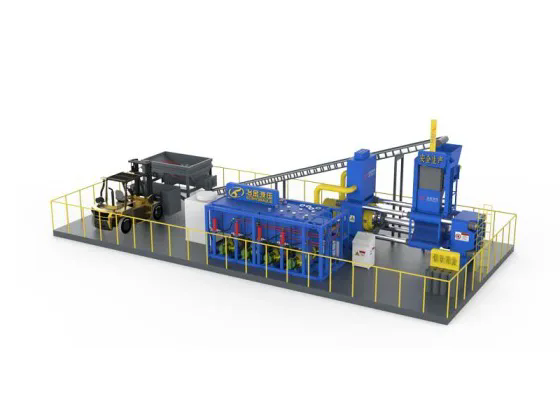
Table of Contents
- What Is a Cast Iron Briquetting Machine?
- What Problems Does Cast Iron Briquetting Solve?
- How Does the Briquetting Process Work?
- What Are the Main Benefits of Cast Iron Briquetting?
- How Should You Select the Right Machine?
- How Can You Improve Operating Efficiency?
- What Maintenance Practices Matter Most?
- Cast Iron Briquetting Compared With Loose Scrap Handling
- Where Are Cast Iron Briquetting Machines Used?
- Frequently Asked Questions
- Conclusion
What Is a Cast Iron Briquetting Machine?
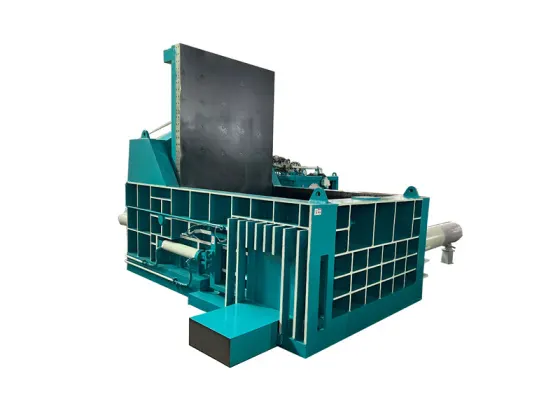
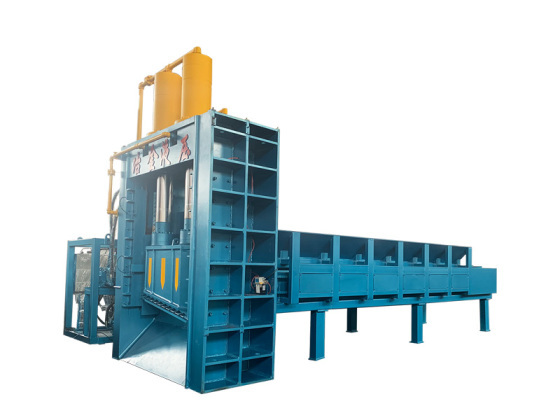
A Cast Iron Briquetting Machine is industrial equipment used to compress loose cast iron scrap into compact briquettes. Cast iron chips and turnings are commonly generated during machining, drilling, milling, grinding, and other metalworking processes. Although these materials still contain valuable metal, their loose and irregular shape can make storage, transportation, melting, and recycling inefficient.
The basic purpose of briquetting is to apply controlled hydraulic pressure to prepared metal scrap until it forms a dense block. Instead of occupying a large volume as loose chips, the processed material becomes easier to store, move, weigh, transport, and feed into subsequent recycling or melting operations.
For manufacturers producing substantial quantities of cast iron machining waste, this approach can address several practical challenges simultaneously. It can help reduce scrap volume, improve workplace organization, simplify material logistics, and make better use of recoverable metal resources.
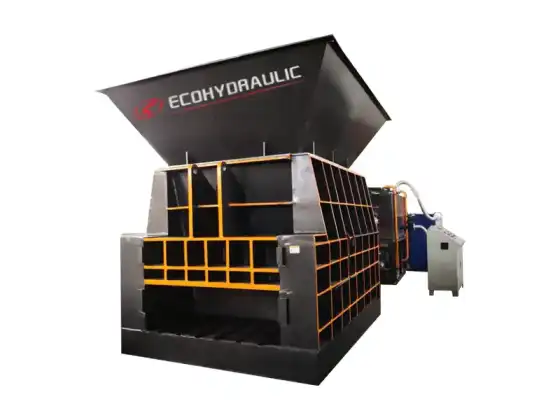
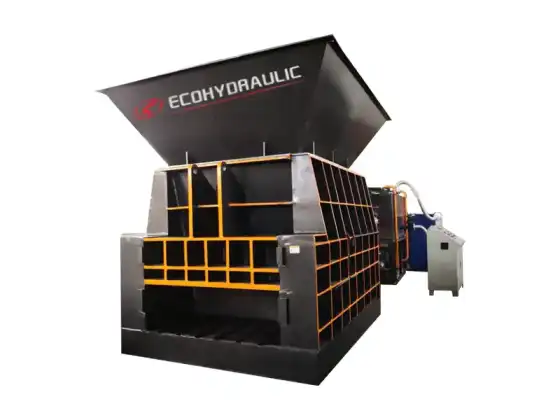
ECOHYDRAULIC focuses on hydraulic metal recycling equipment and provides briquetting solutions intended for industrial applications where reliable compression and efficient scrap handling are important considerations.
What Problems Does Cast Iron Briquetting Solve?
Loose cast iron chips may appear inexpensive to handle, but the hidden costs can become significant as production volume increases. The scrap often contains large amounts of empty space, making bins fill quickly. Irregular chips can also create difficulties during loading, transportation, and furnace feeding.
Common problems include:
- High storage volume: Loose chips occupy considerably more space than compressed briquettes.
- Frequent handling: Large quantities of loose scrap require repeated collection and movement.
- Transportation inefficiency: Trucks and containers may reach their physical volume limits before reaching their practical weight capacity.
- Messy production areas: Uncontrolled chip accumulation can make workshops harder to keep clean and organized.
- Material losses: Fine chips and loose fragments can be difficult to collect completely.
- Inconsistent furnace feeding: Loose scrap may be less convenient to charge into melting equipment than compacted material.
A properly selected Cast Iron Briquetting Machine addresses these issues by changing the physical form of the scrap rather than treating it simply as waste.
How Does the Briquetting Process Work?
The exact machine configuration depends on the material and production requirements, but the basic process is straightforward. Cast iron scrap is collected and supplied to the machine, where a hydraulic system compresses the material inside a forming chamber.
The general workflow can be divided into several stages:
- Scrap collection: Cast iron chips and turnings are gathered from machining operations.
- Material preparation: Oversized foreign objects or unsuitable materials should be removed before processing.
- Feeding: The prepared scrap enters the briquetting chamber through the machine's feeding system.
- Compression: Hydraulic cylinders generate substantial pressure to compact the metal chips.
- Briquette formation: The compressed material takes the shape determined by the forming chamber and machine configuration.
- Discharge: The finished briquettes are discharged for storage, transportation, resale, or further melting.
One important point is that briquetting is not simply about applying the maximum possible pressure. The machine must balance pressure, cycle time, material characteristics, chamber dimensions, hydraulic performance, and production requirements. Excessive pressure without suitable system design does not automatically mean better overall productivity.
What Are the Main Benefits of Cast Iron Briquetting?
For facilities that generate substantial quantities of cast iron scrap, briquetting can provide both operational and economic advantages.
1. Reduced Scrap Volume
Compression significantly reduces the bulk volume of loose chips. This can allow manufacturers to organize more scrap within the same storage area and reduce the frequency of container changes.
2. More Efficient Transportation
Compact briquettes are easier to load and arrange than irregular loose chips. Better space utilization can improve transportation efficiency and simplify scrap logistics, especially when material must be moved between production sites, storage areas, and recycling facilities.
3. Improved Workshop Organization
Loose metal chips can quickly spread around machining areas. A dedicated briquetting system gives operators a structured method for collecting and processing scrap, helping maintain a more orderly production environment.
4. Better Material Recovery
Cast iron has significant residual value. Compressing machining scrap makes it easier to collect and handle as a defined recyclable material rather than allowing small quantities to become mixed with general waste.
5. Easier Furnace Charging
For foundries and metal recycling operations, compact briquettes can provide a more manageable feedstock than loose chips. Their consistent physical form can simplify loading and material handling around melting equipment.
6. Potential Reduction in Handling Costs
When scrap volume is reduced and material movement becomes more organized, facilities may spend less time on collection, storage, loading, and transportation activities. The actual savings depend on scrap quantity, labor costs, logistics, and equipment configuration.
How Should You Select the Right Machine?
Choosing a Cast Iron Briquetting Machine should begin with the characteristics of the scrap and the required production capacity rather than simply selecting a machine based on hydraulic force.
| Selection Factor | Why It Matters |
|---|---|
| Cast iron scrap type | Different chip shapes and material conditions can affect feeding and compression. |
| Hourly production requirement | Determines the required machine capacity and cycle performance. |
| Chip size | Large or irregular pieces may require appropriate preparation before compression. |
| Moisture and oil content | Coolant or cutting fluid can affect handling, cleanliness, and downstream recycling. |
| Briquette dimensions | Should match storage, transportation, recycling, or furnace requirements. |
| Available installation space | Machine dimensions and feeding arrangements must fit the production layout. |
| Automation requirements | Higher-volume operations may benefit from automated feeding and discharge systems. |
| Maintenance accessibility | Easy access to hydraulic and mechanical components can reduce service downtime. |
Buyers should also consider the complete workflow. A machine that has excellent compression performance but poor integration with scrap collection may not deliver the expected productivity improvement. The feeding system, discharge method, material preparation, electrical configuration, and workshop layout should therefore be evaluated as one system.
How Can You Improve Operating Efficiency?
Machine performance depends not only on hydraulic power but also on how consistently the system is operated.
- Maintain consistent feed material: Avoid introducing oversized objects or unsuitable scrap into the compression chamber.
- Control material contamination: Keep excessive foreign materials out of the scrap stream.
- Optimize feeding: Stable and continuous feeding can help maintain predictable production cycles.
- Monitor briquette quality: Changes in density, shape, or consistency may indicate feeding or hydraulic issues.
- Avoid unnecessary idle operation: Coordinating scrap collection with machine operation can reduce wasted operating time.
- Train operators: Proper loading, inspection, and shutdown procedures help protect equipment and maintain stable output.
- Plan maintenance: Preventive inspection is generally more efficient than waiting for an unexpected breakdown.
It is also useful to track basic operating indicators such as scrap input, briquette output, cycle frequency, downtime, and maintenance events. These records help production managers identify bottlenecks and determine whether machine settings or workflow arrangements should be adjusted.
What Maintenance Practices Matter Most?
Hydraulic briquetting equipment operates under substantial mechanical and hydraulic loads. Regular maintenance is therefore essential for stable long-term performance.
Important maintenance activities include:
- Inspect hydraulic hoses, fittings, and connections for signs of leakage.
- Check hydraulic oil condition and maintain the correct fluid level.
- Inspect cylinders and seals for abnormal wear.
- Keep the compression chamber and feeding area free from excessive buildup.
- Inspect electrical connections and control components.
- Check moving components for abnormal noise, vibration, or temperature.
- Inspect structural components for cracks, deformation, or unusual wear.
- Follow the manufacturer's recommended inspection and service intervals.
Operators should pay particular attention to changes in machine behavior. A gradual reduction in briquette density, slower cycles, unusual hydraulic noise, or inconsistent discharge can be an early indication that inspection is required.
Cast Iron Briquetting Compared With Loose Scrap Handling
| Consideration | Loose Cast Iron Chips | Briquetted Cast Iron |
|---|---|---|
| Storage efficiency | Low due to irregular bulk volume | Higher because material is compacted |
| Material handling | Can be difficult and messy | More structured and manageable |
| Transportation | Limited by bulk volume | Better space utilization |
| Scrap organization | Requires larger storage containers | Easier to stack and organize |
| Furnace feeding | Irregular and loose | More consistent physical form |
| Recycling workflow | Higher handling burden | More convenient for collection and processing |
The best solution depends on production volume and operating conditions. For facilities producing only a small amount of cast iron scrap, manual handling may remain practical. As scrap generation increases, however, the logistical advantages of compaction can become increasingly important.
Where Are Cast Iron Briquetting Machines Used?
Cast iron briquetting equipment can be useful across several industrial environments where machining scrap is generated in significant quantities.
- Foundries: For processing recoverable cast iron scrap before remelting or recycling.
- Automotive component manufacturers: For managing chips generated during high-volume machining.
- Heavy machinery manufacturers: For handling cast iron machining residues from large components.
- CNC machining facilities: For organizing chips from continuous production operations.
- Metal recycling companies: For improving the physical form and handling characteristics of collected scrap.
- Industrial manufacturing plants: For integrating scrap compaction into centralized recycling systems.
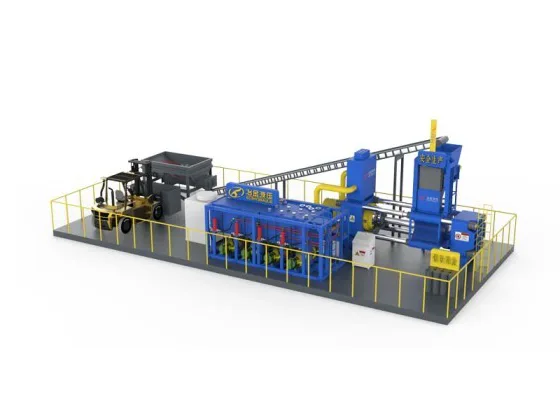
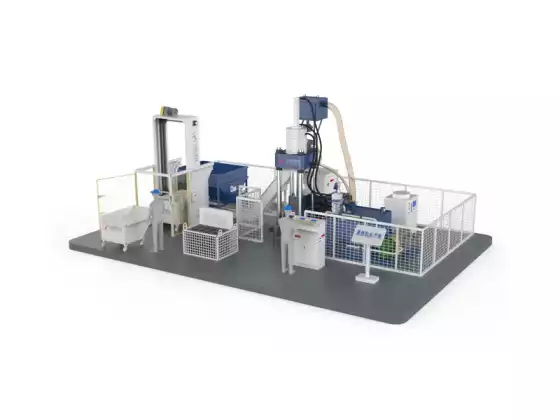
The machine can be incorporated into a broader recycling line or operated as an independent scrap processing unit. The appropriate configuration depends on production capacity, material flow, available floor space, and the desired degree of automation.
Frequently Asked Questions
What materials can a Cast Iron Briquetting Machine process?
These machines are primarily designed for suitable cast iron machining scrap and related metal residues. The exact material range depends on machine specifications, feed characteristics, and the intended briquette requirements. Buyers should provide representative scrap samples or detailed material information when requesting a machine configuration.
Why should cast iron chips be compacted?
Compaction reduces bulk volume and makes loose chips easier to store, transport, handle, and recycle. It can also help manufacturers maintain cleaner and more organized scrap collection areas.
Does higher hydraulic pressure always produce better briquettes?
No. Briquette quality depends on multiple factors, including material characteristics, pressure, chamber design, feeding conditions, cycle parameters, and machine configuration. The objective should be stable and appropriate compaction rather than simply maximizing pressure.
Can oily cast iron chips be briquetted?
Potentially, but the amount and type of oil or coolant should be considered carefully. Material preparation and downstream recycling requirements may influence the appropriate equipment configuration. Buyers should discuss actual chip conditions with the machine supplier before finalizing a system.
How do I determine the required machine capacity?
Start with the average and peak quantity of cast iron scrap generated per hour or per shift. Then consider operating hours, desired briquette output, available storage, feeding method, and future production growth. Selecting capacity only according to today's minimum scrap volume can create limitations later.
What should I provide when requesting a Cast Iron Briquetting Machine?
Useful information includes the type of cast iron, approximate chip dimensions, bulk density, moisture or coolant condition, scrap generation rate, desired briquette size, operating schedule, available installation space, power requirements, and preferred automation level.
Why work with ECOHYDRAULIC?
ECOHYDRAULIC specializes in hydraulic metal recycling equipment and understands that industrial buyers need more than a machine with high compression force. Application requirements, material characteristics, production capacity, machine configuration, maintenance accessibility, and workflow integration all influence the final solution. Discussing these factors before purchase can help customers select equipment that is better matched to their actual operating conditions.
Conclusion
A Cast Iron Briquetting Machine can turn an otherwise difficult-to-manage stream of loose metal chips into a compact and more practical recyclable material. The advantages extend beyond volume reduction. Better storage utilization, simplified handling, improved transportation efficiency, cleaner production areas, and more convenient material recovery can all contribute to a more efficient scrap management process.
The right machine, however, should be selected according to actual production conditions rather than a single specification. Scrap characteristics, required capacity, briquette dimensions, feeding arrangements, automation needs, installation space, and maintenance requirements should all be considered before investment.
For manufacturers, foundries, machining plants, and recycling businesses looking to improve cast iron scrap handling, ECOHYDRAULIC can provide professional guidance on suitable hydraulic briquetting equipment and system configurations. If you are evaluating a new project or upgrading an existing scrap processing line, contact us to discuss your material, capacity, and application requirements and find a Cast Iron Briquetting Machine solution suited to your operation.
Previous :
-
Related News
- How Can a Copper Briquetting Machine Improve Metal Recycling Efficiency?
- How Does an Aluminium Briquetting Machine Transform Metal Scrap into Valuable Resources?
- How Does a Plate Shear Machine Boost Production Efficiency?
- What Are the Advantages of Hydraulic Metal Briquetting Machine?
- How Does an Iron Briquetting Machine Work?
- Are Traditional Scrap Metal Balers Wasting Your Profits?
Leave me a message